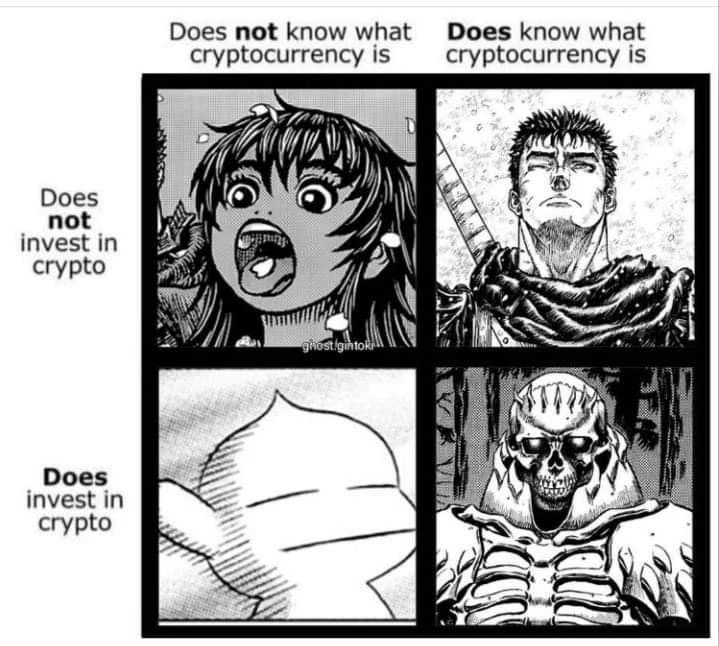
In our previous post, we explored the multifaceted challenges that Bitcoin faces, ranging from its instability to issues surrounding transparency and market manipulation. Building upon that analysis, we delve deeper into the complexities and uncertainties surrounding the world’s most famous cryptocurrency. As Bitcoin continues to capture headlines and spark debates, it becomes increasingly crucial to dissect its shortcomings and implications for the broader financial ecosystem. Join us as we navigate the intricate terrain of Bitcoin’s disadvantages and their potential ramifications.
Currently, despite ongoing mining, Bitcoin experiences deflation. This indicates insufficient currency supply and, more importantly, slow circulation speed as a currency. This is related to the absence of Bitcoin banks. In the Bitcoin capital market, only peer-to-peer lending networks like BTC JAM exist. In other words, individuals with money lend it to those in need, rather than specialized investment entities like banks. (BTC JAM’s loan recovery rate showed a dismal 70-80%, leading to its eventual shutdown.) Thus, the market operates like an online flea market without entities acting as merchants.
Certainly, new coins addressing the flaws of first-generation coins like Bitcoin may emerge to solve these issues. However, relying solely on vague expectations is speculative, and this paragraph assesses Bitcoin, leaving discussions about such solutions to other documents.
Moreover, Bitcoin lacks legal safeguards. Legal recourse is difficult in case of errors in transactions, potentially leading to irreversible losses. For instance, if a Bitcoin wallet is hacked, recovery is impossible. Unlike bank accounts, Bitcoin lacks the legal procedures for traceability or compensation in such cases. Additionally, without enforcing existing regulations, certain financial products requiring compulsory liquidation become impractical. Even basic loans become difficult due to Bitcoin’s characteristics.
Furthermore, there are no provisions for penalizing non-repayment by borrowers, making Bitcoin bonds impossible, and imposing significant constraints on creating options or derivatives. While futures trading markets exist, they require identity verification, undermining Bitcoin’s decentralized and privacy-preserving principles.
Additionally, due to Bitcoin’s predetermined issuance, adopting it as legal tender could prevent the use of conventional monetary policy tools for economic stabilization. This is exemplified by the economic challenges faced by countries like Greece post-2008 financial crisis. Paradoxically, Bitcoin’s lack of controlling authorities prevents it from effectively functioning as a currency. Currency quantities fluctuate seasonally, socially, and culturally, necessitating central banks to adjust currency supplies to match target inflation rates. However, Bitcoin lacks such mechanisms, leading to heightened volatility without control. As Bitcoin becomes more expensive, demand rises, driving prices up, and vice versa, causing fluctuations, making it unsuitable for stable currency functions.
Moreover, frequent fluctuations inflate menu costs. Constantly adjusting prices for products denominated in Bitcoin incurs additional expenses, resembling fees inherent to Bitcoin. Except for extreme cases like Venezuela, where national currency volatility exceeds Bitcoin’s, replacing stable national currencies with Bitcoin is practically impossible.
Furthermore, attempting to replace physical currencies as latecomers is problematic. Almost every country already has its currency, effectively monopolizing its use. Virtual currencies like Bitcoin, as newcomers, are at a significant disadvantage compared to established physical currencies or fiat currencies, which already dominate the market. Even extreme cases of currency crises don’t necessarily lead to wide adoption of new currencies. This market dominance, once established, is hard to disrupt. This characteristic applies to currencies, which are similar to messengers in that they need widespread use to be meaningful. Just as WhatsApp dominates messaging apps while others like LINE remain secondary, Bitcoin, as a newcomer, faces challenges in usurping established currencies.
Consequently, issues arise with exchange fees. While Bitcoin boasts low transaction fees, accessing it without owning Bitcoin incurs substantial exchange fees. Furthermore, currencies that don’t directly support Bitcoin exchanges incur double or triple fees, given the need for multiple conversions. Therefore, widespread Bitcoin use requires navigating through multiple fees. Additionally, Bitcoin network congestion has led to non-zero transaction fees. In reality, the comprehensive fees for Bitcoin transactions are not cheap; they are, if anything, expensive. Even in the cheapest cases, Bitcoin transactions aren’t necessarily the most cost-effective solution and are often more expensive than conventional means. Even in exceptional cases where Bitcoin is cheaper, it’s usually not the sole money-saving method, and there are cases where it’s not.
Hence, aside from limited use cases, the question arises: who will use Bitcoin? For a currency to serve its function, it must be widely used. However, Bitcoin currently lacks sufficient incentives to surpass existing currencies. It’s practically non-existent for the average person. While there is a growing number of stores accepting Bitcoin (although many withdrew support after the major price drop in late 2017), inertia favors established currencies. It’s challenging for Bitcoin to gain widespread use due to its limited use, high fees, and volatile value. Before reaching a point where the majority of citizens and businesses engage with Bitcoin on a daily basis, the future of Bitcoin remains uncertain.
Additionally, Bitcoin has unexpectedly high fees and accessibility issues, limiting its widespread adoption. Some optimistically believe that time will solve these issues, but the rapid, decentralized, cheap, and free currency system envisioned by Nakamoto Satoshi has essentially failed. The attempts to increase Bitcoin’s size for faster transactions have been thwarted by mining consortia, indicating the impossibility of achieving such a vision.
 FinEducate
Leave a comment