Introduction
Warren Buffett, often referred to as the “Oracle of Omaha,” is one of the world’s most successful investors. His investment strategies and principles have not only made him one of the wealthiest individuals globally but have also inspired countless others in the world of finance. This blog post delves into Warren Buffett’s investment strategies, offering insight into the wisdom that has guided his remarkable success.
1. Value Investing: The Cornerstone of Buffett’s Approach
Buffett’s investment philosophy can be summed up in two words: value investing. He is a disciple of Benjamin Graham, the father of value investing, who stressed the importance of buying stocks at a discount to their intrinsic value. Buffett’s strategy revolves around finding well-established companies with strong fundamentals that are trading at a price below their intrinsic value. He’s known for his preference for “wonderful companies at fair prices” rather than “fair companies at wonderful prices.”
2. Long-Term Perspective
Buffett is famous for his long-term perspective. He once said, “Our favorite holding period is forever.” This means he doesn’t engage in short-term speculation or market-timing. He invests in businesses with the intention of holding them for many years, if not indefinitely. This long-term horizon allows him to weather market fluctuations and take advantage of the power of compounding.
3. Quality over Quantity
Buffett is highly selective in his investments. He emphasizes quality over quantity, often holding a concentrated portfolio of stocks in companies he thoroughly understands. This selective approach ensures he can closely monitor and assess the businesses in his portfolio. Diversification is not a primary goal for him; instead, he believes in making well-informed bets.
4. Moats and Competitive Advantage
Buffett frequently talks about a company’s “economic moat.” This metaphorical moat represents a competitive advantage that protects a company from competitors. It can take various forms, such as strong brand recognition, network effects, economies of scale, or proprietary technology. Buffett looks for businesses with sustainable moats, as they are more likely to maintain their market positions and profitability over time.
5. Margin of Safety
Another principle borrowed from Benjamin Graham is the concept of a margin of safety. This means that Buffett seeks to buy stocks at prices significantly below their intrinsic value, providing a safety net if his valuation estimates are incorrect or if unforeseen events affect the business. The margin of safety acts as a cushion against potential losses.
6. Continuous Learning
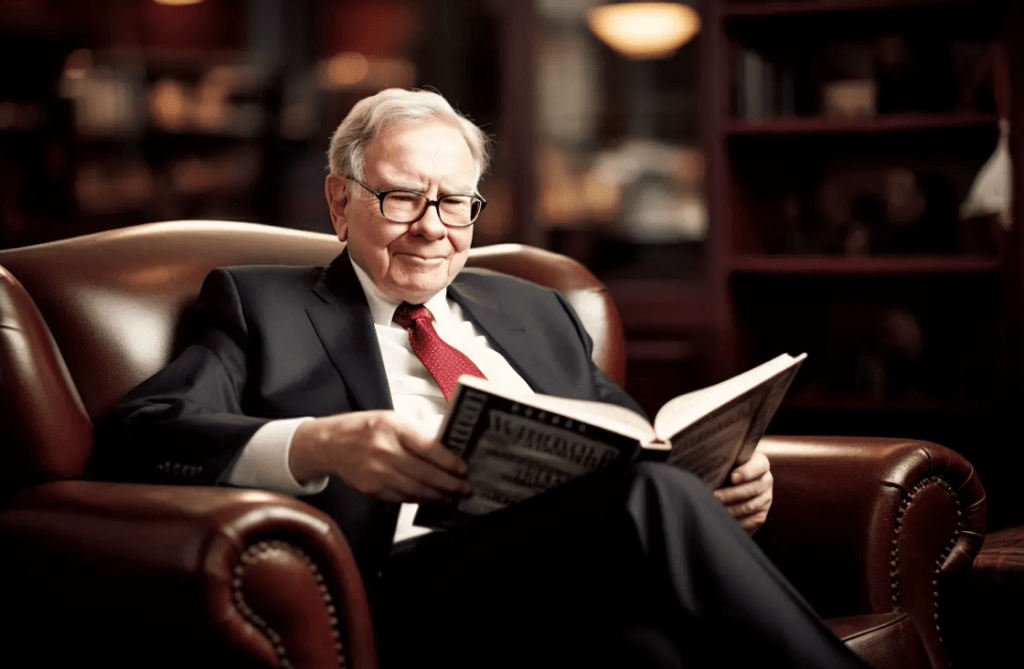
Buffett’s success is underpinned by his continuous learning and intellectual curiosity. He is an avid reader and dedicates a substantial amount of his time to reading annual reports, financial statements, and books on various subjects. His intellectual capital is a critical factor in his investment decision-making.
7. Contrarian Approach
Buffett is known for his contrarian approach. He often invests in industries or companies that others are avoiding. During economic downturns or market pessimism, he sees opportunities to buy great businesses at attractive prices.
8. Patience and Discipline
Patience is a hallmark of Buffett’s strategy. He emphasizes the importance of resisting the urge to trade frequently or react to market noise. His discipline in adhering to his investment principles, even during market turbulence, has been a key driver of his success.
Conclusion
Warren Buffett’s investment strategies have consistently proven successful over the years. His commitment to value investing, long-term perspective, emphasis on quality, and his relentless pursuit of knowledge have guided him to become one of the most respected and influential investors in the world. While Buffett’s approach may not be suitable for every investor, the principles he embodies, such as the margin of safety, the economic moat, and patient discipline, offer valuable lessons and insights for anyone seeking to navigate the world of investments with prudence and wisdom.
 FinEducate
Leave a comment